


Making Vietnamese Coconut Caramels (Kẹo Dừa)
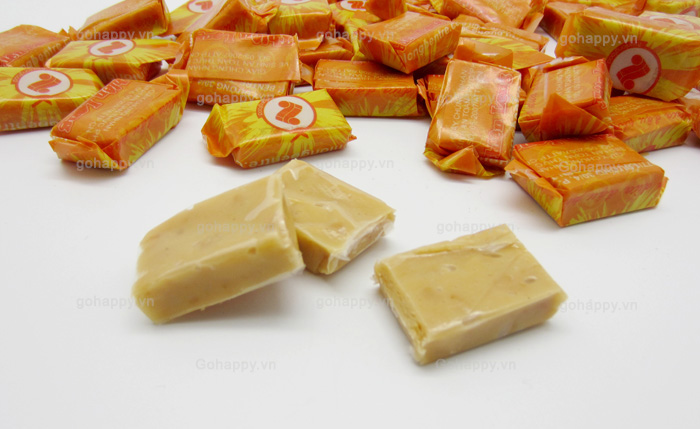
On our last day in Vietnam, we booked a quite affordable Mekong Delta day trip from Saigon/Ho Chi Minh City. We went with low expectations, because how could a tour costing $10/person and including lunch make money without luring us into potentially dubious pay-as-you-go attractions? Certainly a tour like this would not touch upon the physical and human geographic principles so beautifully illustrated by the confluence of history, culture and nature in the Delta as craved by a nerd like myself.
And, to be perfectly honest, what we expected is what we got. Luckily, I found myself enjoying a few of the tourist traps into which we were shuffled, primarily the coconut caramel factory, where I could pretend I was a winner in some messed up contest wherein a cult-of-personality crazed candy maker sticks winner-tickets into the wrappers of candies to lure asshole kids and their parents into his custody where he puts them in mortal danger.
Come to think of it, maybe that’s why there were graves lining the path from the river to candy factory’s entrance.
The candy factory’s building was unassuming, just like all the others in that part of the Mekong Delta. Aside from a monstrous tourism authority building more fitting for a rest stop in Florida than a dock in southern Vietnam, most structures in this area consist of a simple roof topping a tile floor with one or two walls. Open air structures are common, given electricity’s steep price. With an afternoon siesta in a hammock, a good fan and some shade are all most people need for comfortable living and working, even in the humidity.
The coconut caramel (kẹo dừa in Vietnamese) factory was no different. Outside, or, a few steps off the tile and out from under the roof, a sampling of tools used to break coconuts sprouted out of the ground. Because the candies use the meat of the coconut, the makers just throw the coconut water on the plants outside and get to work shaving out the white insides.
Once the makers have liberated the coconut meat, they get to work making coconut milk, a process that entails grating the meat, soaking it in water, squeezing out the juice, and straining out the desiccated coconut chunks. The leftover meat can be pressed to extract coconut oil, which is nice to use in cooking and in beauty applications. The pressing is a simple mechanical process, the same type of process we hope happens to the olives, grape seeds, and sunflower seeds that make up the higher quality cooking oils.
Coconut milk is magic. It’s creamy, but it’s vegan. It’s full of saturated fat, but it might not be that bad for you. Also? It caramelizes. At this factory, the caramelization happens over a wood burning stove while a mechanical arm churns the coconut milk and sugar until it deepens in color to a rich brown and reaches the semi-hard, yet meltable consistency of a good caramel. The caramelization process is largely unattended, despite being fueled by wood, a fickle heat source. In my few bouts of caramel making, temperature variations caused catastrophe, and that was with a candy thermometer on a gas range. Somehow, the process works for these confectioners without being anal retentive about the chemistry portion. It seems that years of experience and knowledge with the caramels has trained the workers to sense the readiness in other ways.
When the caramel is done, the makers pour it into a large bowl and add various mix-ins. Unsurprisingly, the Vietnamese prefer durian flavors, but westerners stick to the plain or peanut variety. When it’s cooled, the candy maker scoops out a bunch of the brown goop and flattens it into an even disk on a piece of what appears to be oiled cloth. She takes a plate and carves off lines of candy, while shooing away the chickens, dogs, children, and tourists always underfoot.


