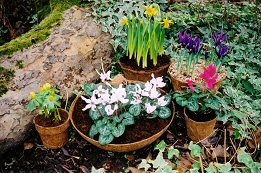
Have you ever thought of all that C02 emitting energy that goes into making a Plastic pot ?
|
 |
 |
|
||||
|
They last about 12 months above ground before they go ‘hairy’, and biodegrade over several months when planted. We say ‘ several’ as they are very natural products, with a lot of hand crafting about them. All of our pots are made in southern Sri Lanka from a sort of village women’s co-operative. Let me show you how every single pot is carefully shaped by hand, spread with natural latex, by hand, and lastly given a short back and sides - you’ve guessed it - by hand ! |
||
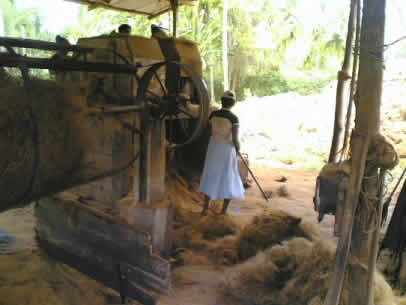 State of the art machinery is used by the ladies for both of these processes. |
First the coir fibres are separated from the coconut husks. Then the fibres are tossed in a ‘drum’ to separate the coirgranules from the fibres. You can see these granules collecting underneath the drum. These will be used to make our coir compost discs |
|
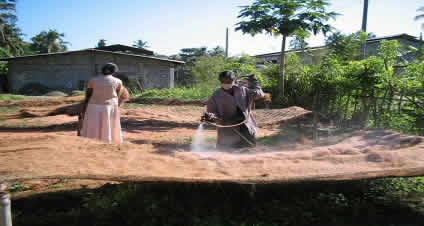 The fibres are washed in fresh water. |
||
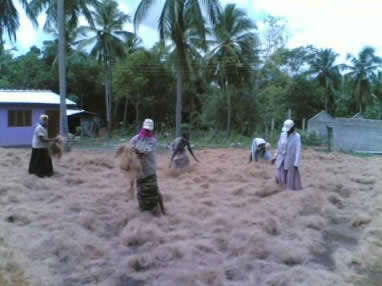 Dried in the sun. |
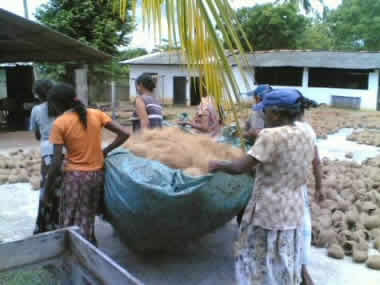 Then off it goes to their “factory”. |
|
|
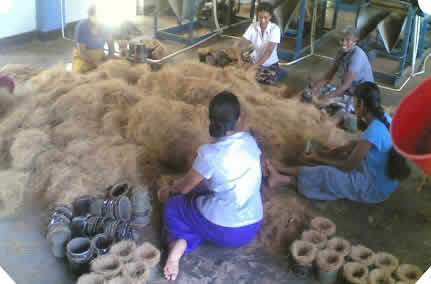
Here’s a part of the factory. The fibre is being formed into pot shapes by being pushed into various sizes of pot “moulds”. |
||
 |
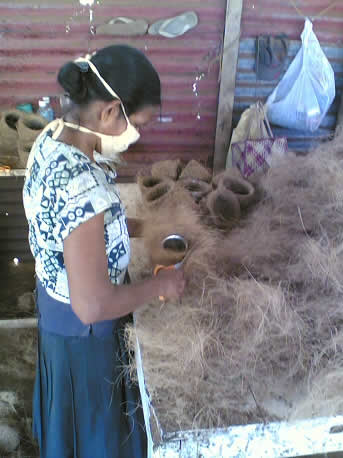 Which are then given a quick trim |
|
|
A lifetime of poverty, then all that devastation, but they don’t ask for our aid ! It makes me so cross to hear people saying that we should stop trading overseas. Oh sorry, my rant has made me come over all peculiar, now where was I ? Well next stop for the dummies are the latex ladies |
||
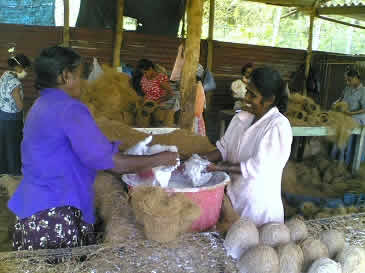 What could be making them smile so much ! |
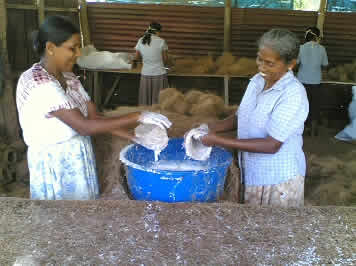 |
|
|
Then off go the pots to dry in the sun.
|
||
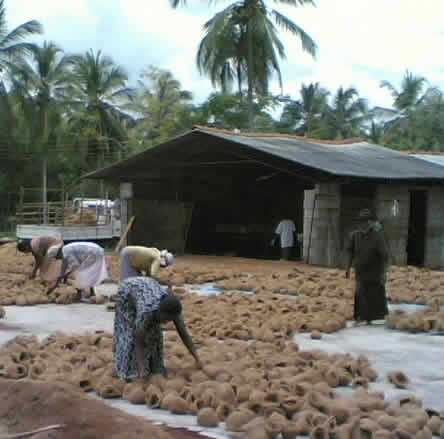 The pots are turned over regularly. ! |
||
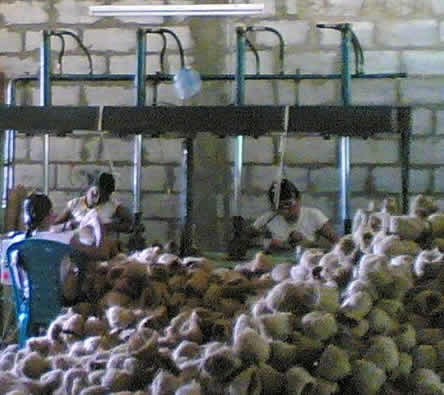 There is one more ‘high tec’ operation. Pressing the pots into their final shape and consistency. They don’t waste much on decor ! |
||
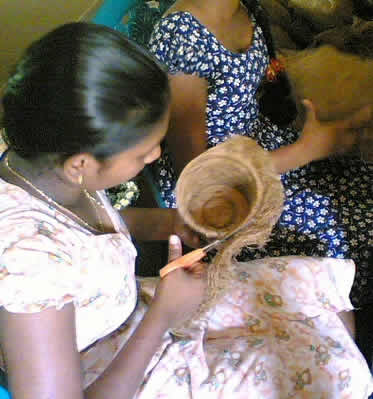 Just a last finishing touch |
Each pot is carefully trimmed,inspected and packed. Then off these pots go on their travels. A journey which began in the warm earth of the Sri Lankan countryside, but which can end in enriching the soil of your garden. And a journey which offers fair free trade, and an income for just a few of all those folk who are not quite as lucky as us . |
|
|
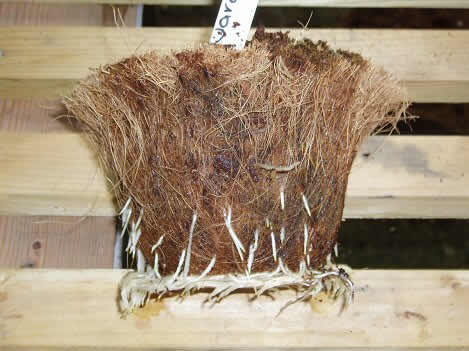
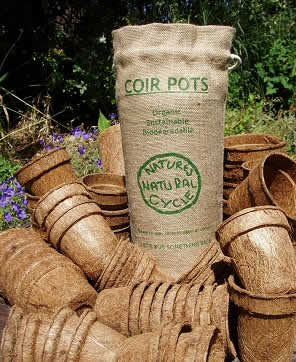
Plant these coir pots directly into the ground, there is absolutely no waste - you are just giving something back, letting that old natural cycle take over. The organic natural Jute bag we package them in has a myriad of uses in the garden, and of course - after a couple of years - you can then compost it. Remember, pot bound plants never quite recover. The narcissus below shows how this problem is avoided, having grown in one of our coir pots - left in an open greenhouse - for around 9 months.
|
|
|
|