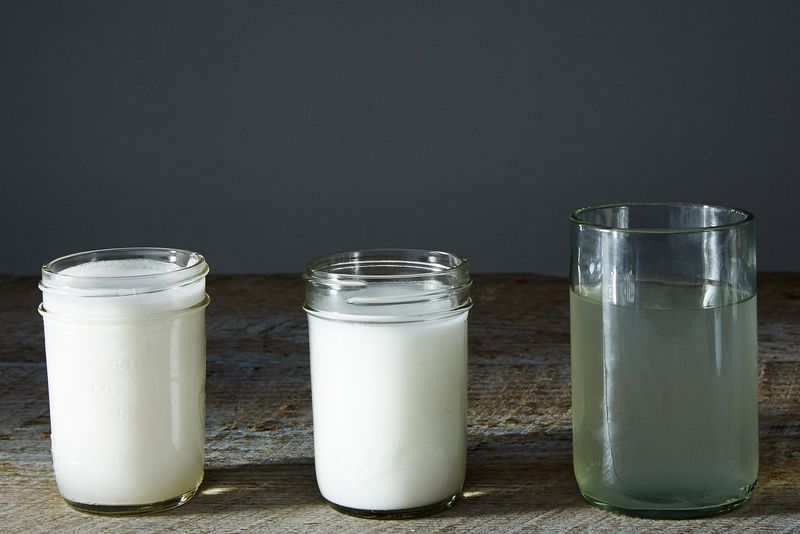
What it is: Coconut oil is by far the most confusing of the coconut products, as there are a slew of labels and varieties to choose from—the most common (at least commercially) being “refined” and “virgin.” The simple synopsis is that all coconut oil comes from coconut meat. How it gets extracted, however, is where we get differences in quality and usage.
How to buy it: Find coconut oil in the oil section of the grocery store. You’re looking for the pure white kind labeled “virgin” or “refined”—they have good-for-you saturated fats. Skip anything that includes chemicals, trans-fats, or the words “bleached,” “deodorized,” and “hydrogenated.”
How to store it: Coconut oil will stay good and solid at room temperature for two years. Like most oils, though, store the jar in a cool area, far from the oven or a sunny counter. Coconut oil will melt at 76° F, but when cooled, it will harden again.
How to use it: Slightly sweet and nutty, coconut oil works in a 1:1 ratio in any recipe (both sweet and savory) that calls for butter or oil. Since it is solid at room temperature, it also works as a shortening substitute; simply swap 1 part shortening with 3/4 coconut oil. Just remember that refined and virgin oils have different smoke points, meaning refined coconut oil works for high-heat cooking (like frying) and virgin coconut oil is better for lower heat applications (like sauteing and baking and melting on popcorn).
To melt the oil, place the measured amount in a small bowl and submerge the bottom in warm water. You can also use a microwave. For flaky applications, like this Perfect Vegan Pie Crust, simply use the measured amount straight out of the jar in its solid form.

Some recipes to try: