


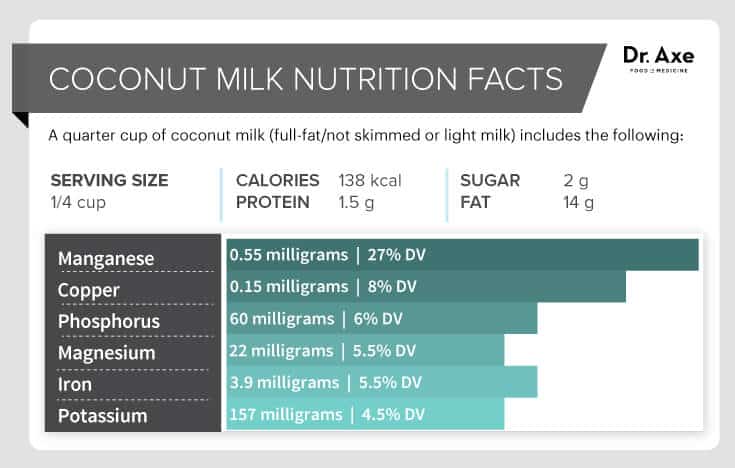
- 14 grams fat
- .55 milligrams manganese (27 percent DV)
- .15 milligrams copper (8 percent DV)
- 60 milligrams phosphorus (6 percent DV)
- 22 milligrams magnesium (5.5 percent DV)
- 3.9 milligrams iron (5.5 percent DV)
- 157 milligrams potassium (4.5 percent DV)
Health Benefits of Coconut Milk
1. Improves Heart Health by Lowering Blood Pressure and Cholesterol
Coconuts are one of the best sources of lauric acid — 50 percent of the fat in coconuts is lauric acid, which has antibacterial and antiviral activities. According to many studies, lauric acid is a protective type of fatty acid linked with improved cholesterol levels and heart health.
For example, when 60 healthy volunteers were given coconut milk porridge (CMP) for five days a week for eight weeks, researchers found that their low density lipoprotein (LDL) levels decreased while their “good” high density lipoprotein (HDL) levels rose significantly. They concluded that “coconut fat in the form of coconut milk does not cause a detrimental effect on the lipid profile in the general population, and in fact is beneficial due to the decrease in LDL and rise in HDL cholesterol.” (2)
Because coconuts contain minerals important for circulation and controlling blood flow, coconut milk is also useful for lowering blood pressure and keeping blood vessels flexible, elastic and free from plaque buildup. For example, magnesium may help combatstress and muscle tension while aiding in circulation and keeping muscles relaxed, important for preventing heart attacks.
2. Builds Muscle and Helps Lose Fat
Studies find that medium-chain triglycerides (MCT) fatty acids found in coconut milk increase energy expenditure and help enhance physical performance. Following exercise, muscles also need plenty of nutrients — including electrolytes like magnesium and potassium that are found in coconut milk — to repair broken down tissue and grow back even stronger.
Because coconut milk is high in healthy fats, it also helps fill you up and prevent overeating or snacking throughout the day, which derail your efforts to improve your body composition.
3. Provides Electrolytes and Prevents Fatigue
Although coconut water is a higher source of electrolytes, coconut milk also provides important minerals needed to maintain blood volume, regulate heart health, and prevent dehydration or diarrhea. Especially in very hot weather, following exercise or after being sick, electrolytes help prevent exhaustion, heat strokes, heart problems, muscle aches or cramps, and low immunity.
Coconut milk also contains the types of MCTs that are easily used by your brain for energy, without even needing to be processed through your digestive tract with bile acids like some other fats. Coconut milk’s calories provide a quick and efficient source of healthy calories for the brain, which is actually primarily made up of fat and relies on a steady stream of it to function.
4. Helps Lose Weight
According to a study done by the School of Dietetics and Human Nutrition at McGill University,
consumption of a diet rich in MCTs results in greater loss of fat (adipose tissue) compared with long-chain fatty acids, perhaps due to increased energy expenditure and fat oxidation observed with MCT intake. MCTs may be considered as agents that aid in the prevention of obesity or potentially stimulate weight loss. (3)
As a food high in MCTs, coconut milk is a very filling,fat-burning food. Fats provide the feeling of being full and satisfied and can help prevent overeating, snacking, food cravings and potentially weight gain.
Of course, portion control is important considering the calorie count of coconut milk, but as a part of a healthy diet it provides necessary fatty acids in addition to other minerals that support weight loss and detoxification. Coconut milk is also hydrating and helps the digestive organs, like the liver and kidneys, function properly, which helps metabolize fat and remove waste from the body.
5. Improves Digestion and Relieves Constipation
A well-hydrated digestive tract is important for preventing or treating constipation. (4) Coconut milk nourishes the digestive lining due to its electrolytes and healthy fats, improving gut health and preventing conditions like IBS.
6. Manages Blood Sugar and Controls Diabetes
The fat content of coconut milk can help slow the rate at which sugar is released into the bloodstream, better controlling insulin levels and preventing a “sugar high” or worse, conditions like diabetes. This is one reason why coconut milk is especially good to add to sweetened recipes, like desserts. Coconut milk’s MCTs are also a preferred source of energy for the body rather than sugar.
7. Helps Prevent Anemia
Although the iron content of coconut milk isn’t very high, it still provides a good source of plant-based iron that can contribute to a diet sufficient at preventing anemia.
8. Prevents Joint Inflammation and Arthritis
Coconut milk’s MCTs can help lower inflammation, which is associated with painful conditions likearthritis and general joint or muscle aches and pains. Coconut milk in place of refined sugar especially is helpful for people with arthritis (or other autoimmune conditions) because sugar is a pro-inflammatory and linked to low immunity, worsened pain and swelling.
9. Prevents Ulcers
Another benefit of coconut milk nutrition that may surprise you? Researchers found that coconut milk can help reduce the occurrence of ulcers even better than coconut water. When rats with ulcers were given coconut milk, they experienced a reduction in the size of ulcers of about 56 percent. The study found that coconut milk had protective effects on the ulcerated gastric mucus that can lead to painful ulcers. (5)
Which Kind of Coconut Milk is Best to Buy?

Merchandising. Sales assistant in supermarket lay out goods on supermarket shelves at storeIt’s simple enough to make coconut milk yourself at home, but if you’d rather buy a premade kind, look for the purest coconut milk you can. The best kinds of coconut milk are organic and contain no added sugar or sweeteners, preservatives, artificial sweeteners, and aren’t pasteurized (which can potentially destroy some of the nutrients).
Look for coconut milk (ideally organic) that’s been “cold pressured,” which indicates it’s only been lightly heated and processed to remove certain bacteria but hasn’t been exposed to high heat that can deplete vitamins and minerals. Skip any coconut milk (or water) that’s flavored with juices, sweeteners, colors or other ingredients. You’re better off adding your own if you want to improve the flavor.
The primary ingredient should be 100 percentcoconut milk and maybe coconut water. Some companies also add guar gum, which is a natural product used to stabilize the texture. Make sure the label indicates the milk is unsweetened to avoid a total sugar bomb.
One final note: If you buy canned coconut milk, avoid cans made with the chemical called BPA. BPA is found in some aluminum cans and has the potential to cause certain health problems when it leashes into foods (especially foods high in acid or fat, like coconut milk). Although the FDA still considers it safe, many nutrition experts disagree due to certain studies linking it to behavioral problems and other health concerns. (6) Look for an indication that the can is made without BPA and is “BPA free.”
Some of the best store-bought brands of coconut milk that meet this criteria include: Aroy-D (my personal favorite), Natural Value and Native Forest Organic.
How to Make Homemade Coconut Milk

Many people feel that canned or boxed coconut milk can’t compare to the homemade kind. Luckily, you can easily make your own coconut milk at home by purchasing fresh, young coconuts. Look for fresh, mature coconuts in the refrigerated section of health food stores, or try using coconut meat that’s been removed from the shell already. Just make sure to find coconuts or coconut meat that’s still fresh and is either vacuum-sealed or opened within the past three to five days. The fresher the coconut is, the longer the coconut milk lasts.
Here’s how to make your own fresh coconut milk that you can be sure is free from any artificial ingredients or preservatives:
1. First look for fresh coconuts and give them a good shake, making sure you can hear and feel some liquid moving around inside. That tells you they’re fresh.
2. You need a sturdy cleaver to crack open a coconut, but you can also use any heavy knife or a hammer you may have at home.
3. Bang the cleaver on the top of the coconut until you hear a crack. Then strain the coconut water out, and keep it for smoothies and other refreshing drinks. You’re left with two–three coconut pieces that have the white flesh/meat inside attached to the inedible shell. Remove the flesh either by cutting it out with a paring knife or continue to hit the back of the coconut until the meat falls off from the shell.
4. Rinse the coconut meat well, and chop it into small pieces. Then add your coconut meat to a blender or food processor along with about two cups of water.
5. Blend it into a thick liquid, and then strain it using a metal strainer or cheesecloth so you can separate the coconut pulp/meat from the coconut milk. Squeeze the coconut pulp well with your hands to get the most coconut milk to strain out.
That’s it! Now use the coconut milk in some of the ways below, while keeping the meat for homemadecoconut flour, coconut scrubs, to make dried coconut flakes or to add to smoothies.
Coconut Milk Recipes
How can you use coconut milk at home to take advantage of all the coconut milk nutrition benefits you just learned about? If there’s a healthy item you might want to toss in your grocery cart or make yourself experiment with in the kitchen, make it coconut milk.
Coconut milk is loved in Thailand, India, Hawaii and other parts of Asia, plus it’s well-known in the culinary world because of the creamy texture and rich taste it gives to curries. But its uses go way beyond soups and stews. Coconut milk is really versatile and works great in both sweet and savory recipes.
Some surprising things you can do with coconut milk? It can be added to omelettes to add creaminess without needing dairy milk or cheese, combined withnuts to make spicy “satay sauce,” whipped into coconut whipped cream, used to make coconut ice cream and many other ways too, such as adding it tohomemade facial masks and hair conditioners.
Coconut Milk Coffee Creamer Recipe
- 1 can coconut milk
- 1–2 teaspoons vanilla extract
- 2 tablespoons coconut oil, melted
- Raw honey or vanilla stevia to taste
- Sea salt to taste, optional
DIRECTIONS:
- Combine all ingredients in a blender and mix until well combined. Use in coffee as desired.
- Frozen Berries with Coconut and Lime Recipe — This recipe is refreshing, healthy and delicious. Next time you get a craving for something sweet, try this!
- Coconut Milk Baby Formula Recipe — If there’s a situation where a baby is not getting breast fed or there needs to be an additional supplementation, this is a great alternative. Although I always recommend breast milk, this substitution is free of the chemicals and additives present in most formulas and full of nutrients every child needs to develop and grow.
Are There Any Concerns with Drinking Coconut Milk You Should Know About?
Coconuts are low-allergen foods, especially compared to dairy products, soy and nuts. This makes coconut milk a good choice for many people who can’t tolerate other types of milks or creamers. One thing to be mindful of with coconut milk is how much you consume, considering it has a high calorie and fat content. While the fat is definitely a healthy type, portion control is important, especially if you’re working toward reducing your weight.
Some of the minerals found in coconut milk could potentially interact with certain health conditions. For example, people with kidney disease need to be careful about how much potassium they obtain from foods. However, because coconut milk isn’t a very high source of potassium, it’s not much of a risk drinking it.


